Artist’s Statement
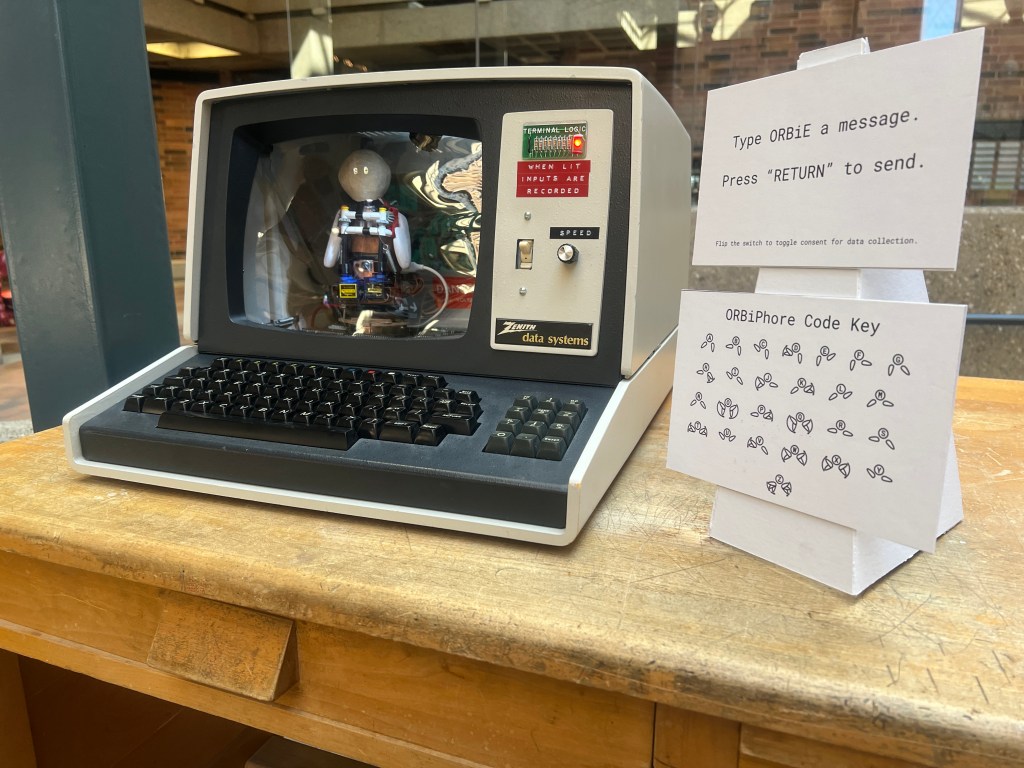
Living with ORBiE helps me think about what it means to be human. For one thing, to be a human is to be a meaning-making machine. I find that even in these early stages, with simple interactions based on a computer program from 1967, I find myself more able to create meaning from our exchanges than I expected. Do you?
With ORBiE, for now, it’s clear that all the meaning-making happens in my head. Replies are only loosely based on the context of what I’ve said, and are designed to reflect my intention back to me. I wonder how things will feel when I give ORBiE more modern algorithms to play with. I wonder what algorithms I play with.
Open the desk drawer to see the control code.
Data Collection Notice
The switch on the face of the Z-19 terminal enables or disables data collection, and the red LED on the same panel indicates whether or not data is being collected.
When the switch is ON
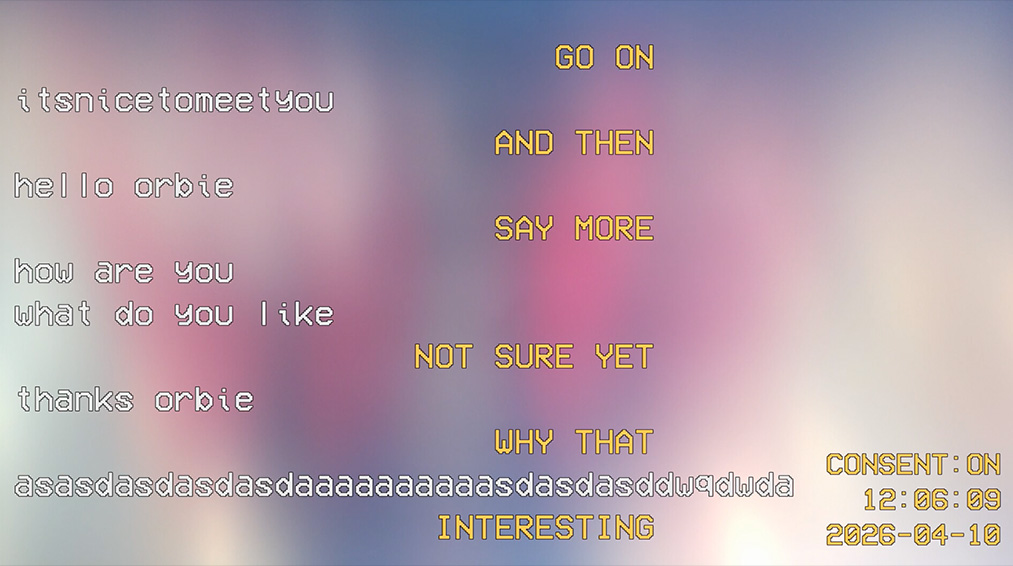
By interacting with the system while the switch is ON, you consent to data collection. All entries will be recorded. ORBiE’s in-body camera takes a photo once every few character inputs. The camera is covered by a light-scattering film, which obscures identifiable features physically before the light hits the camera sensor. Below is a frame from the resulting video.
When the switch is OFF
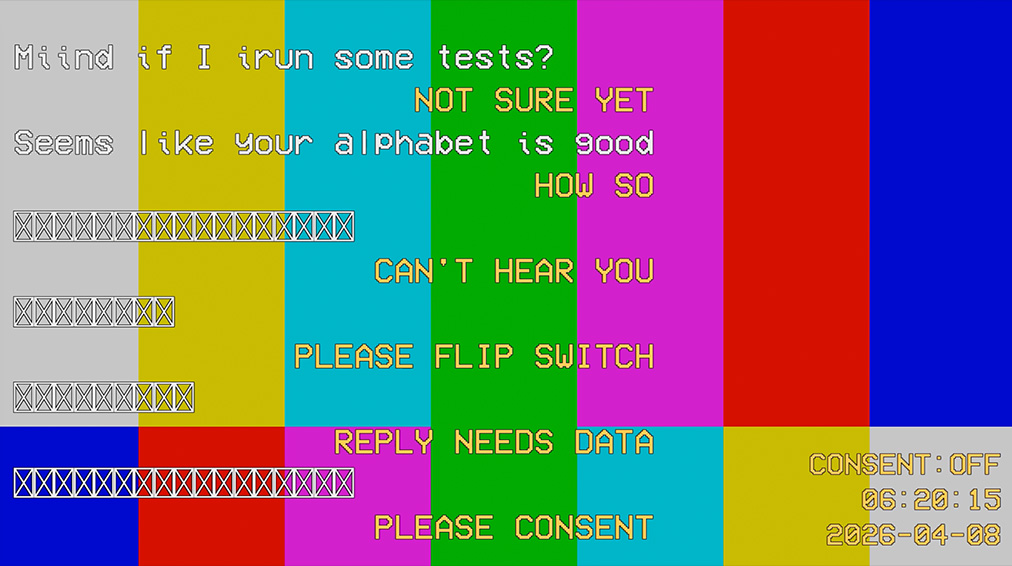
When the switch is off, the pattern of interaction is logged, but content is not. ORBiE’s in-body camera does not take photos. Below is a frame from the resulting composite video.
Collected data may be used for artistic and research purposes, including documentation and exhibition. Data is stored by the artist for the duration of the project, and not shared beyond the scope of the project.

