
In the dark months of winter, when even the sun has a difficult time getting out of bed, Alex and I typically find ourselves groggily hitting the snooze button more times than good sense would permit. One possible solution: an alarm clock that offers “a unique combination of light and sound so you can wake up in a more natural way and feeling more refreshed”. It seemed like it might be worth a shot, so I had one drop-shipped in advance of Alex’s birthday.
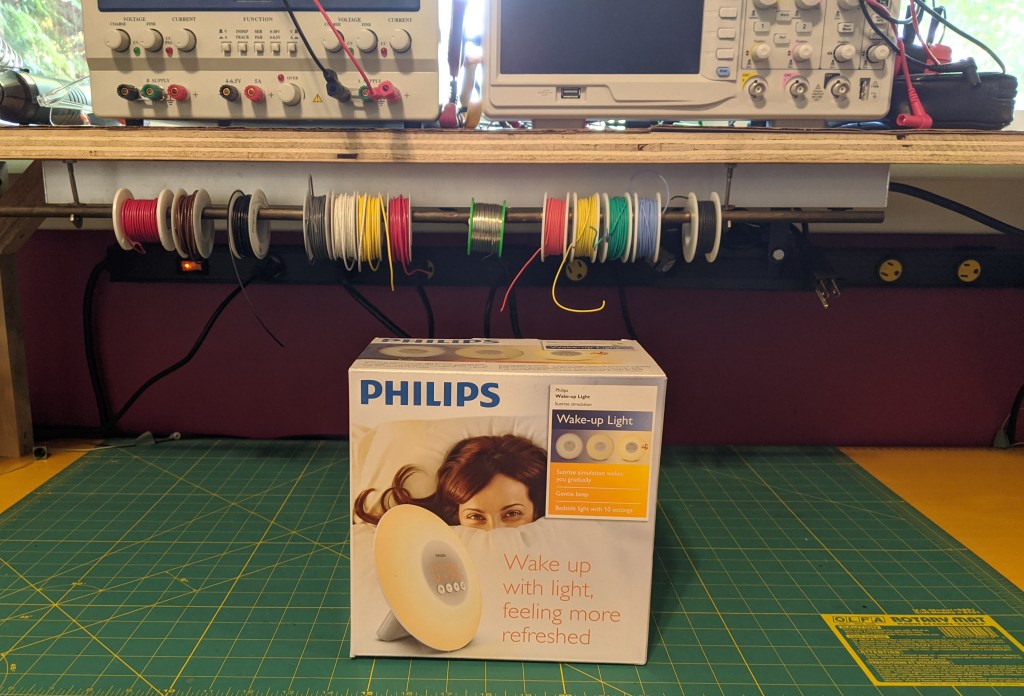
In truth, I would say this light works almost exactly as advertised. The gradual sunlight simulation is quite effective and does prepare your body to wake up in advance of the alarm… the only trouble is that the “natural” alarm sound at the end of the sunrise sequence seems to have been sampled from a woodpecker attacking a squirrel.
Since learning about kintsugi a few years ago, I’ve been taken with the concept. The underlying idea is that when a thing is broken or not working right, there exists an opportunity to repair it in such a way that it becomes more beautiful or functional than it was originally, even before the damage was done. In the case of our alarm clock the damage was done by the designer—but there still exists the opportunity for artistry.
Initial Surgery
Sometimes to make a thing better you’ve got to do a little damage yourself. First things first, I had to take the clock apart to modify the internals. Thankfully, I wasn’t the first person whose ears were beseiged by the blistering beeping and decided to do something about it. This youtube video by Metatronic Mods was indispensable in taking the light apart successfully. Apparently, the designers spent much more effort in making the device impenetrable than they did in choosing a soothing wakeup sound. I had a sensible chuckle when the sticker hiding the screws told me there were “no serviceable parts inside”.
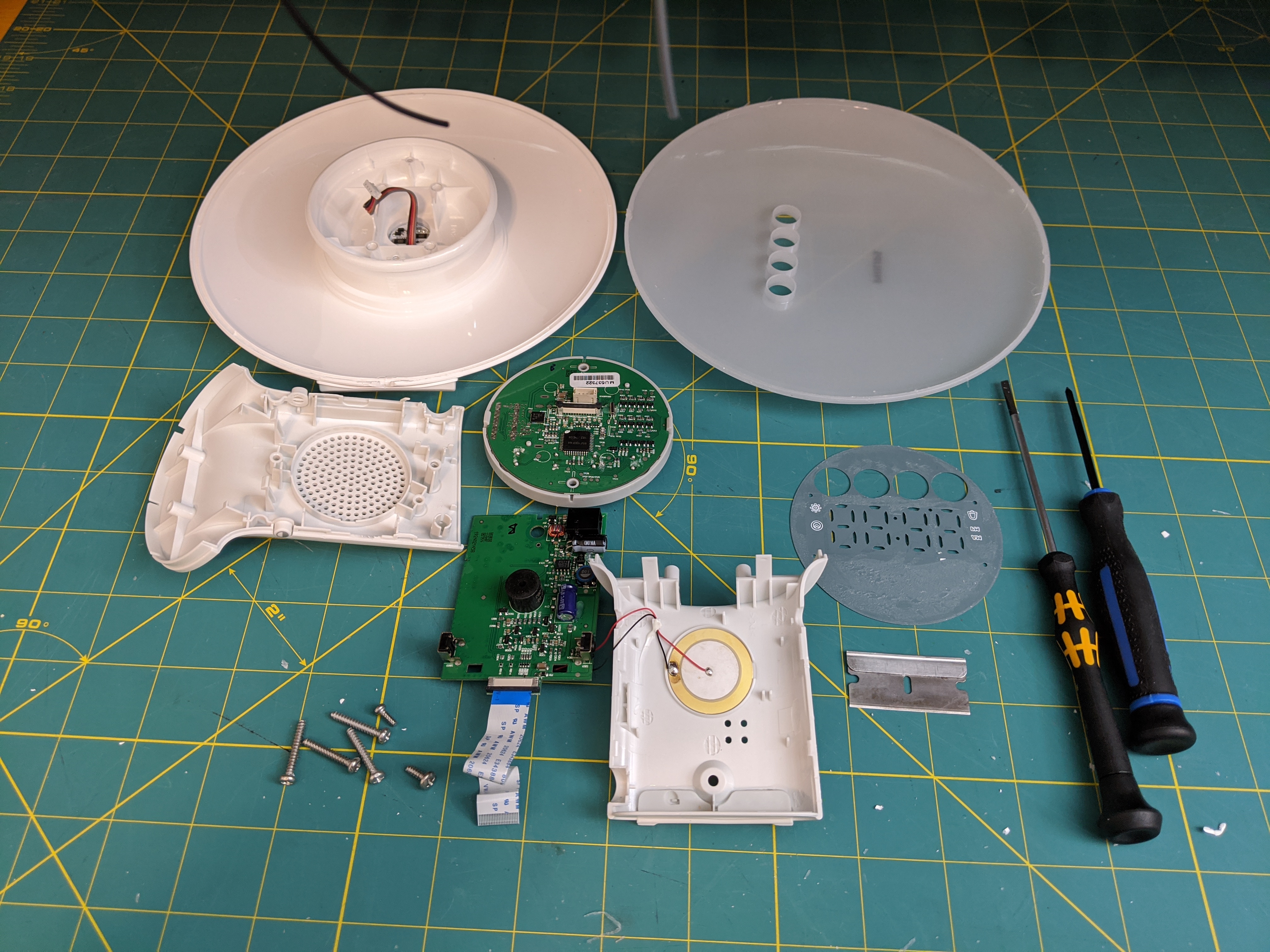

Once the clock was apart and the offending buzzer removed, I was able to solder on two signal wires, which then passed through a hole I drilled in the base of the clock.
Signal Modification
In order to make use of the signal coming out of the board, I used a low-pass RC filter, which changes the original signal into something usable by an Arduino. Since the filtered signal is always above the digital logic threshold, it will look to an Arduino digital pin as HIGH any time the alarm is on, and LOW otherwise. This means that Philips takes care of time-of-day, alarm settings, sunrise simulations, and everything else the clock should, but the alarm signal triggers the Arduino instead of the buzzer—and we can have the Arduino make whatever sound we want.
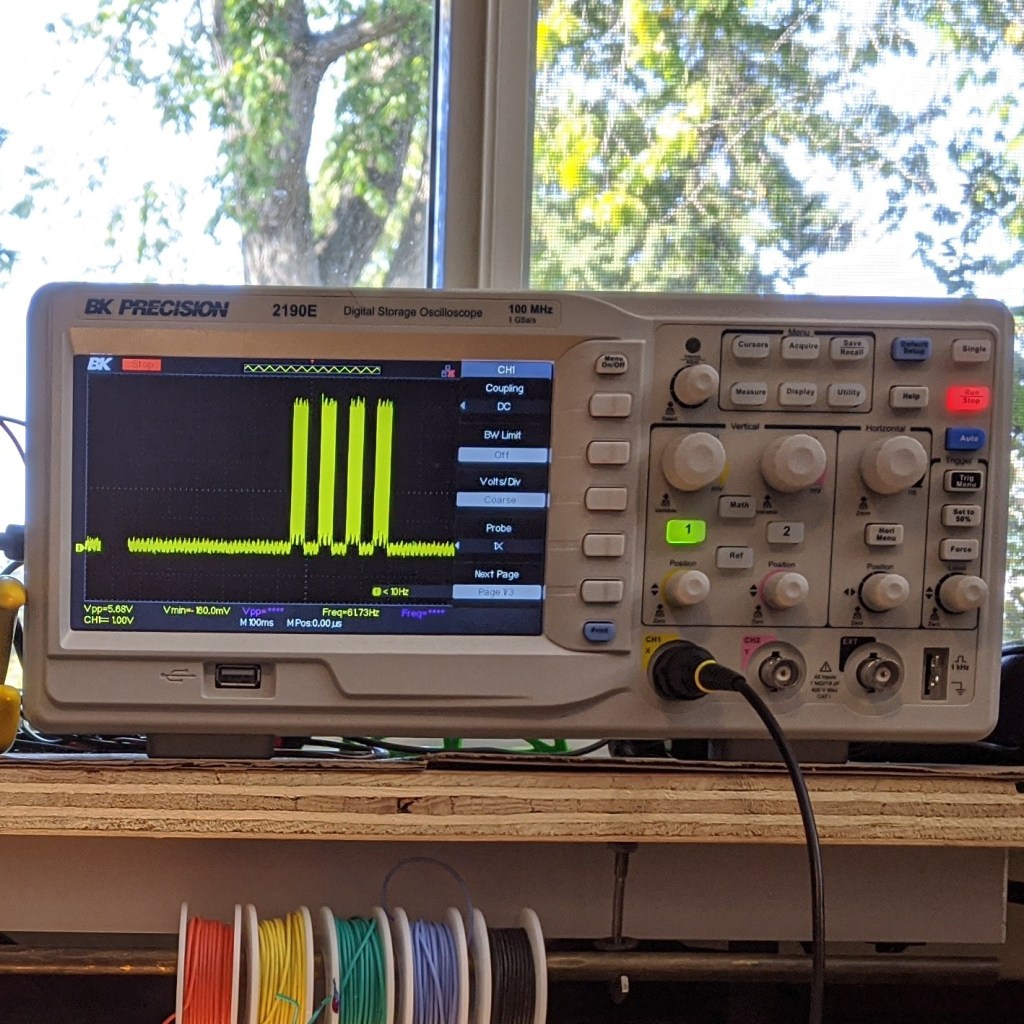
Original signal 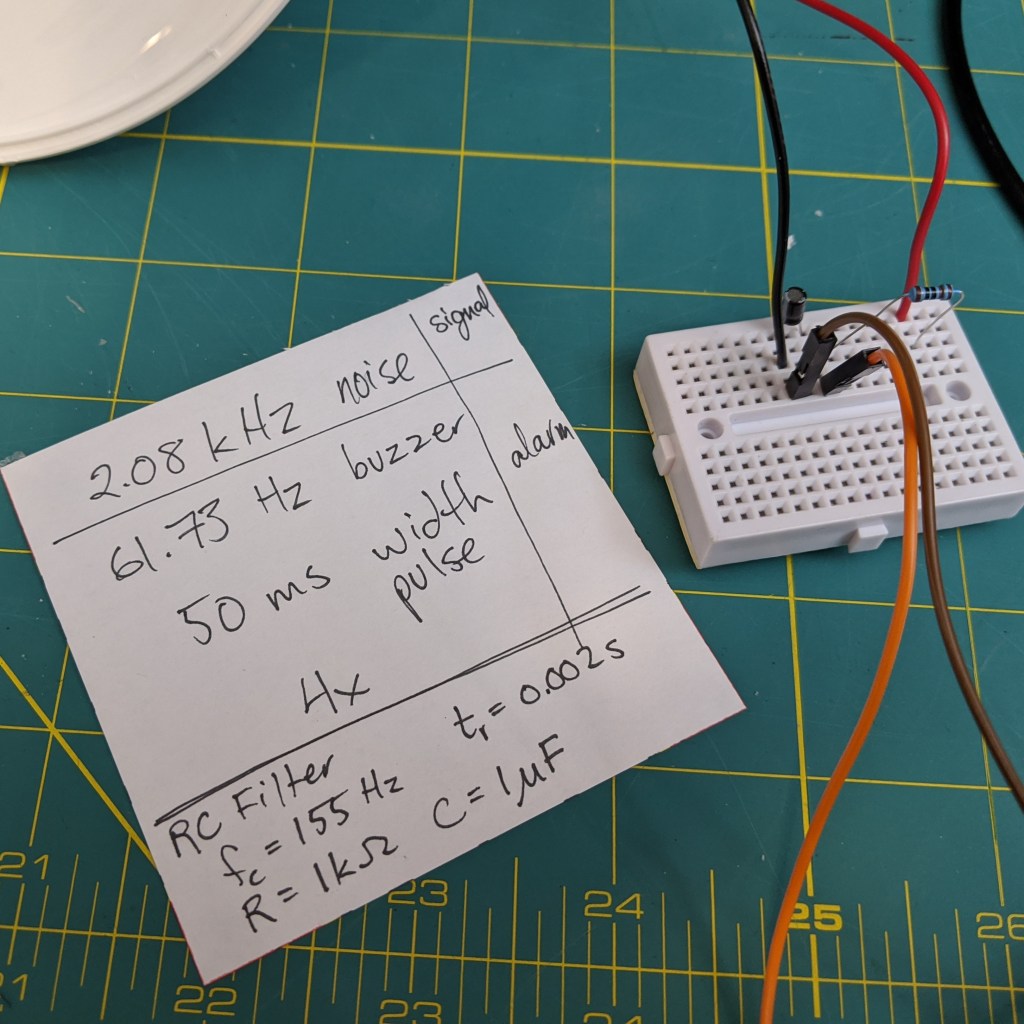
RC filter 
Filtered signal
Control Code
Inspired by the way our yogi brings us out of Shavasana with three slow chimes, I decided it might be nice to wake up to a similar sound and cadence. Additionally, having an auto-snooze feature to save me from dragging myself to the alarm clock might be a nice reprieve. The pseudocode for the alarm sequence I decided on was
while (alarm activated):
    repeat 3 times:
        ring chime once
        wait 10 seconds
    wait 10 minutes
end
If you’re interested in recreating something similar for yourself, the full Arduino code can be found in my Github repository.
Wiring
The wiring here is pretty simple: RC filter straight from alarm signal to digital pin 2, and set up the brushed DC motor using a PWM-based motor driver on pins 4 (for direction) and 5 (for torque).

Mechanism
To recreate the soothing chime, I used a cheap DC brushed motor, which swings a 3D-printed hammer into a hole-saw. A surprising combination, to be sure—but actually sounds great. If you’re planning on recreating this build, you can find my 3D CAD files on Onshape, and I would warmly recommend a 2 1/8″ hole saw for a bell.
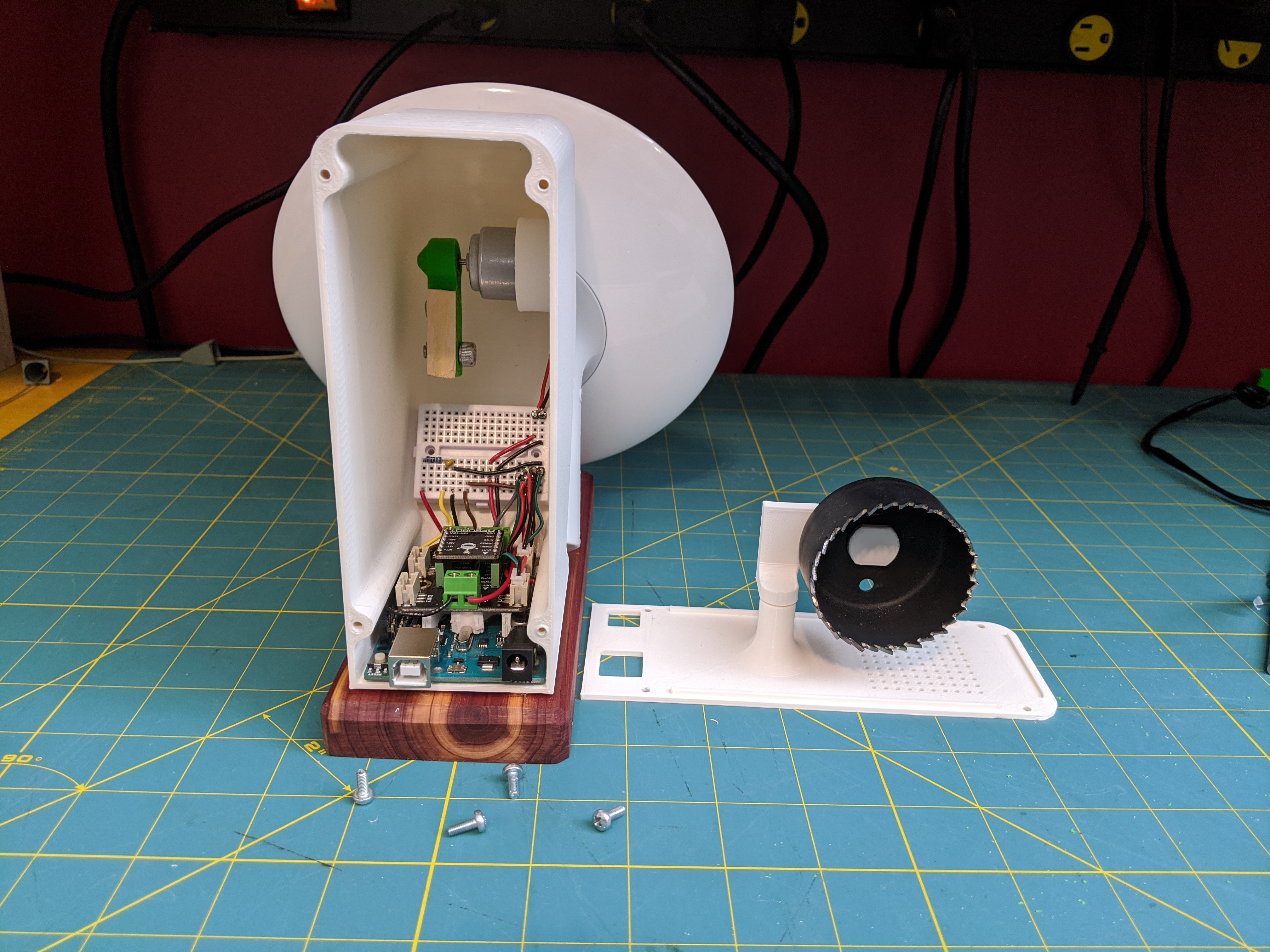
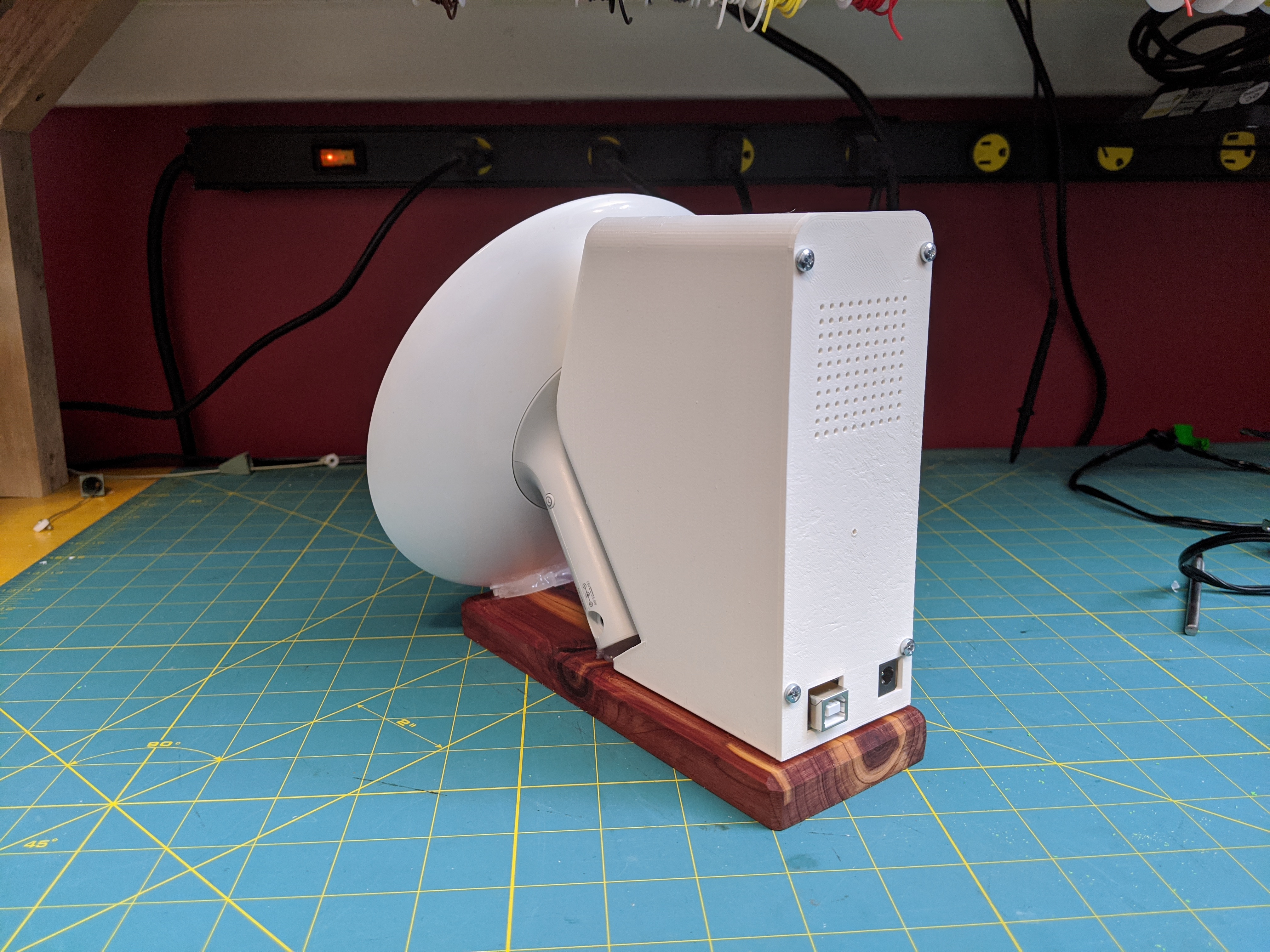
The whole unit sits atop a nice piece of aromatic cedar, rubbed with linseed oil.
Final Product
All in all, I’d say it turned out pretty well. A few weeks into waking up to this sequence, I’m still finding it quite pleasant. The only small change I might make in the future would be to replace the hard plastic hammer with a smaller chime on a rubber arm, that would add a pleasing harmonic to the sound and remove some of the harsher transients associated with the initial strike. To see a demo of the alarm cycle, check out this video.


 Dylan Brenneis